
Keep every number connected to its source

Spend less time assembling the same report.

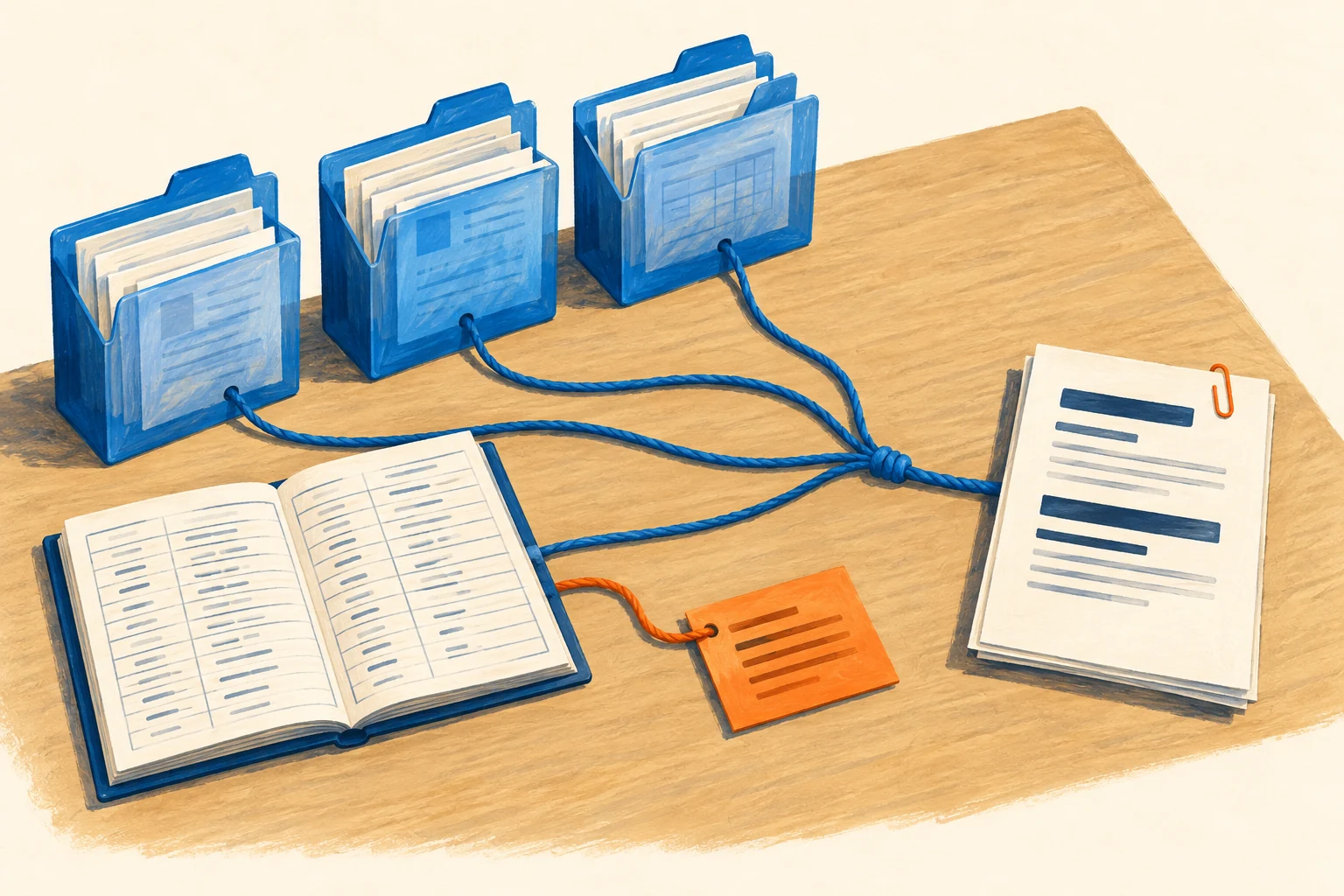
Connect the records your team relies on and make missing information easier to spot. We build reporting and review tools around approved sources and clear definitions.

We reply within one business day. Use the contact form to request a conversation about your work.

Painted source folders and a ledger connected to a report, with an exception marked in orange
Know the source. See what needs attention.Toledo & Detroit Metro

The work behind the request

The report is ready, but nobody agrees with the total.

One export includes a correction that another file missed. A column has the same name in two systems but counts something different. By the time the report reaches a meeting, the person who prepared it is explaining the spreadsheet instead of discussing the decision it was meant to support.

We start with the record and the question you need it to answer. That means agreeing on definitions, following the information back to its source and deciding what should happen when values disagree. A reliable reporting process makes its gaps visible so the team can resolve them before treating the result as complete.

A record you can trace

Trace a disputed total back to the record.

Illustrative workflow: an operations team combines records from an approved file export and a business system. The example describes a proposed reconciliation process, not a completed client deployment.

  1. 01Source record

    Keep a reference to what arrived.

    Identify the source file or record and when it was received. Preserve enough context to distinguish a corrected export from an older copy used in a previous report.

  2. 02Field mapping

    Make the definition explicit.

    Agree how each source field maps to the shared report. Record decisions such as which date belongs in the reporting period and how missing or duplicate identifiers should be handled.

  3. 03Exception review

    Put disagreements where someone can resolve them.

    Show the conflicting values with their sources and an assigned reviewer. Keep the original information available when the reviewer records a correction or decides to exclude the record.

  4. 04Report release

    Show what the total includes.

    Present the agreed measure with its refresh information and unresolved exceptions. A reader should be able to tell whether the report is ready for the decision they need to make.

What this makes possible

A useful acceptance check follows a disputed figure back through its calculation to the source. It also shows what happens when an input is late, incomplete or corrected after the previous report.

Where this helps

Start with work you recognize.

We connect approved data sources to reporting and review tools that show where the information came from and what needs attention. The work starts with a specific report or decision and the people who understand the source records.

For teams assembling the same report repeatedly or checking several systems before they can trust a record.

Illustrative workflows, scoped to your tools and team.

Use case 01

Prepare a recurring report

Today
Someone exports files, adjusts columns and rebuilds a report for each review.
With help
A scoped pipeline can prepare the agreed fields and show when the source information was updated.
People’s role
The report owner checks definitions, totals and exceptions before using the result.

Use case 02

Reconcile incoming records

Today
The team compares documents and records by hand to find missing or conflicting information.
With help
A review queue can group the records, apply agreed checks and flag differences for investigation.
People’s role
A person resolves discrepancies before a record moves into an approved state.

Use case 03

Make data quality visible

Today
A missing field or failed update is discovered when someone needs the report.
With help
Defined checks can expose incomplete records and show who needs to address them.
People’s role
The source owner decides whether to correct, exclude or investigate the record.

What your team takes forward

Every exception needs a person who can resolve it.

We document who owns the source, who can approve a correction and who maintains the report. Those roles may belong to different people, so the handoff makes clear how an issue moves between them and when a report should be held.

  • A source map and shared definitions for the fields and measures in scope.
  • The agreed data model, transformations and quality checks.
  • Reporting or review views that make missing information and exceptions visible.
  • Instructions for access, refreshes, corrections and ongoing ownership.
See my project path

A boundary for the first release

Agree on definitions before combining the records.

These decisions influence what we build, how you test it and what it costs to keep running.

  1. 01

    A decision and its required records

    Begin with the report your team needs, then include the sources required to support its measures and checks.

  2. 02

    Agreed definitions and conflict rules

    Name who decides when a field is ambiguous and which source takes precedence for each kind of information.

  3. 03

    A visible refresh and repair process

    Plan how late files, changed columns and failed imports are detected, assigned and corrected before the next report is used.

Make the economics work

Source references can reduce repeated report checking.

Reducing wasted time may improve your margin when you avoid an expense or take on additional paid work. Count the cost of review, corrections, software and upkeep before deciding whether the change pays for itself.

  1. Less reconstruction before a meetingShared definitions and source references can reduce the time spent rebuilding the explanation behind a report each time someone questions it.
  2. Corrections that leave a trailA reviewer can see why a record was changed and which source supported the decision, making the next discrepancy easier to investigate.
  3. A lower reporting burdenReducing recurring export, cleanup and reconciliation work may lower the effort needed for each reporting cycle. Refresh costs and exception handling belong in that comparison.

Put a number to your own workflow.

Use the calculator to compare the time recovered with the cost of running the workflow. Savings depend on your process.

Estimate my return

A useful starting point

When this makes sense.

  • You can name the report, review queue or decision that needs better information.
  • The source systems are accessible and someone can explain the records.
  • Your team can define which source wins when values disagree.

Before committing

Sort this out first.

  • The required records cannot be accessed or lawfully used for this purpose.
  • Key definitions are disputed and there is no owner to resolve them.

Your existing tools

Keep what already works.

We assess the source systems, update frequency and permissions before scoping a data connection. Records keep a clear source so reviewers can investigate a discrepancy.

  • Approved database, file or API sources
  • Agreed field mappings and refresh schedules
  • Access rules and visible checks for missing or conflicting records
Compare my build and buy options

Keep exploring

A little reading before the call.

Before we talk

Questions worth asking.

For anything specific to your tools or team, bring it to the conversation.

Request a call
Do we need to move all our data into a new system?

The project can start with the sources needed for one report or review queue. We assess where the data should live and how it should be accessed before recommending a wider migration.

Can you work with spreadsheets and file exports?

They may be suitable sources when the format, permissions and update process are clear. We check a representative sample and agree how changes or incomplete files should be handled.

Will AI decide which records are correct?

Rules and source ownership should determine how records are reconciled. If AI helps extract or classify information, the scope must also define validation and the person who reviews uncertain results.

Toledo & Detroit Metro

Bring the report you rebuild every week.

Show us the inputs and the part that needs the most checking. We can discuss where the effort comes from and what a smaller, traceable reporting process would require.

Request a call

We follow up to arrange a time. Your form does not book an appointment automatically.

Painted Great Lakes shoreline with a sailboat and a neighborhood beyond the water